

Supported using public funding by Arts Council England
There is a Light and a Whistle
for Attracting Attention
By Henri Merriam
“You’ve never seen Grease? Are you kidding? Ok. So there’s this guy and this girl…”
In the beginning, there were stories. Stories of girls and women and men and Love. So when she meets him, she knows the script, and she’s ready. But things are starting to go wrong, and the stories she’s been told don’t serve her anymore.
She doesn’t fit the role. She needs to rewrite her part. So she can be seen.
Be brave. Take a breath.
There Is a Light and a Whistle for Attracting Attention is an intimate solo play by Henri Merriam, exploring emotional manipulation, self-doubt, and the quiet ways power operates within relationships.
Following a critically acclaimed 2025 tour, the production is returning for a second run in 2026.
The play is brought to you by award-nominated Play Nicely Theatre (Splinter, The Mechanicals Present…), written and performed by Henri Merriam, directed by Sophia Capasso, originally co-produced in 2025 by Mark Finbow, and produced for the 2026 run by Marcello Pautasso.

The production is supporting Women for Women International (Registered Charity No. 1115109), a charity that helps women survivors of war and conflict rebuild their lives. To learn more about Women for Women International, visit: womenforwomen.org.uk | @womenforwomenuk
2026 TOUR DATES | 17th JULY – 13th SEPTEMBER
17 July
The Garage in Norwich
The Garage 14 Chapel Field North Norwich Norfolk NR2 1NY
8pm | £15 (£12.50 concs)
www.thegarage.org.uk | 01603 283382
20 - 21 July
Underground at the Working Men’s Club (part of Buxton Fringe)
15 Lightwood Road, Buxton, SK17 7BJ
20 July 5.15pm | £12 (£10 concs)
21 July 3.45pm | £12 (£10 concs)
www.buxtonfringe.org.uk | 020 8144 0070
27 - 30 July
The Squad House at Greater Manchester Fringe
Unit D2A, 3rd Floor, Pear Mill, Stockport Road West, Lower Bredbury, Greater Manchester
7.30 pm | £10 (£8 concs)
www.greatermanchesterfringe.co.uk | 07436770047
8 - 13 September
The Hen & Chickens Theatre Bar in London
109 St Paul’s Road, London, N1 2NA
7.30 pm | £16.50 (inc £1.50 membership)
www.unrestrictedview.co.uk | 020 7354 8246
Theatre and Art Reviews
*****
Merriam’s performance is faultless, using the stage space creatively. Prepare to go on an emotional roller-coaster.
Voice Mag
The script is poetic and gorgeous. There is an almost lyrical quality to it, with the play shifting deftly between reality and metaphor. Humour and heartbreak are balanced well with many moments of quiet devastation and sharp comedy.
Broadway Baby
*****
Every aspect of this prescient production is admirable – nothing less than a triumph. The staging is subtle, adept and clever, enabling the narrative to evolve and flow. The writing focuses on an issue for our times and the director, Sophia Capasso, displays a certain yet light touch.


Team
Meet the Team for There is a Light and a Whistle for Attracting Attention.
We're delighted to have this crack team. We can't wait for you to see their work.

Writer / "Her"
Henri Merriam
Henri trained at LAMDA.
Credits include: Elephant for Feast Theatre, Krampus: COPELAND:life. The Mechanicals Present and Splinter for Play Nicely Theatre; Heroine for Snatchback; Hound of the Baskervilles for The Seagull Rep. Nora's Ark and Untold Tales for the Marina Theatre, Titus Andronicus, Othello and Romeo and Juliet (Smooth Faced Gentlemen).About a Dog (Allegra Productions, Radio 4) and Strike: Troubled Blood (Bronte Productions, BBC).

Director
Sophia Capasso
Sophia is a storyteller from Suffolk with over a decade of experience.
Her journey in the industry began an actor, working on various high profile jobs; notably guest reg Evie on BBC’s EastEnders, Endeavour (ITV), Pride & Prejudice (Regents Park Open Air Theatre), Chasing Shadows (ITV) and Casualty, London Kills, Hetty Feather (BBC).
Over the last five years Sophia has been working towards autonomy over the stories she tells which led her to form TUTTI TUTTI Productions, a collaborative of creatives telling human stories through film and theatre. Portfolio can be found at www.tuttituttiproductions.com
Directing credits include; On the Overground (The Seagull), Chef-ess (Theatre 503), The Einstein Letter (The Other Palace), VOiD (The Vaults, Ventnor Fringe), Time Traveling with Myself (The Seagull). Shadowing Director credits include; Emmerdale (ITV), Eastenders & Casualty (BBC)

Producer
Marcello Pautasso
Marcello Pautasso is a London-based scripted development executive working across television, film, and theatre. He has developed projects for UK and international markets with companies including Channel 4, Hat Trick Productions/HTM Television, and Emanata Studios.
His theatre producing credits include the fringe production Lost Unfound by Laila Bouromane for Hambre Productions. He is leading the second run and touring strategy for There Is a Light and a Whistle for Attracting Attention.

Lighting Design
Holly Ellis
Lighting Designer credits include: Personal Values (Hampstead Theatre); Double Act (Southwark Playhouse); Bright Places, The Promise (Birmingham Rep/UK Touring); The Barber of Seville (Waterperry Opera); I'm Gonna Marry You Tobey Maguire (Southwark Playhouse); Errol's Garden (Uk Tour); The Long Run (New Diorama Theatre/UK Tour); Spy for Spy (Riverside Studios); Blanket Ban (Southwark Playhouse); On The Ropes (Park Theatre); Casteing (Roundabout); Animal Kingdom (Hampstead Theatre Downstairs) and Instructions for A Teenage Armageddon (Southwark Playhouse - Offwestend Nomination for Best Lighting Design).
Associate Lighting Design credits includes: Shanghai Dolls (Kiln Theatre for Aideen Malone) Kyoto (@Sohoplace for Aideen Malone); A Sherlock Carol (Marylebone Theatre for Rui Rita).

Set & Costume Design
Shahaf Beer
Shahaf is an Israeli-Jewish theatre maker based in London, specialising in design-led work & visual storytelling.
Shahaf has an imaginative approach to theatre-making and focuses on how we can translate stories visually to both surprise and excite audiences.
Design credits include The Jewish Dog (Mead Award, Omnibus Theatre, and Sprint Festival, Camden People's Theatre 2025). Plewds (Mary Dick Award, Summerhall 2024). Crying Shame (Stanley Arts Queer Arts Commission, Charlie Harthill Award Winner- Pleasance Edinburgh Fringe 2024, and Vogue Italia), The Word Of Yesterday (Camden Fringe 2024, Voila! Theatre Festival 2024), Pygmalion (Evolution Festival, Lyric Hammersmith Theatre 2023), and
One Night Stand (Royal Court Theatre 2022).

Sound Design
Frazer Merrick
Frazer Merrick is a sound artist who uses field recording, circuit bending and instrument building to create carnivalesque experiences which explore the act of play.
He transforms spaces and objects, encouraging the audience to become a curious performer and embrace play through interactivity, improvisation and collaboration. His work materialises as playful interactive sculptures, transportive soundscapes and empowering educational projects.
He has played a gig underwater, sound designed a time machine and built a microphone that turns light into sound. Frazer has exhibited at galleries including Firstsite and Focal Point Gallery, performed at venues such as Snape Maltings and Colchester Arts Centre, and had compositions aired on Channel 4 and the BBC.

Dramaturg
Nicola Sanderson
Nicola Sanderson is an actor, writer, and director.
Acting credits include the National Theatre, West End and many regional, national and international touring productions, for companies including Cheek by Jowl, Northern Broadsides and Manchester Royal Exchange.
Her numerous TV and radio appearances include Slow Horses, Boat Story, Coronation St, Eastenders and Extras. As a writer her first play Diamond Hard won the Almeida Theatre's WRITE competition, and she co-created and starred in three series of the BBC Radio 4 comedy Beauty of Britain. Nicola has also been a guest director at LAMDA and the University for The Creative Arts .

Touring Technician
Mark Fawcett
Mark runs the audio visual business Fish Need Snorkels. He studied physics at Durham University and now has thirty years’ experience in the recording and live music industry. He has recorded everything from solo artists and string quartets to rock bands and symphony orchestras.
Mark has worked with internationally renowned classical artists such as Nicholas Daniel, Mike Cox, and Julius Drake, Bob and Barn (film and Sony video games composers), Tony Britten (Champions League), and the Bingham, Coull, Castilian, Artesian and Maggini string quartets. He mixes front of house sound at live shows at EPIC Studios, Norwich.
Mark is an experienced theatre sound technician and has worked on the fEast theatre team for over ten years, creating sound design (and writing music) for all their tours. He has a long career playing guitar in bands and is founder member of Neil Young tribute band Don’t Spook The Horse. He is a singer songwriter and has produced three albums and written music for BBC world service’s ‘Farming Today’.

Marketing
Benjamin Willmott
Ben is a freelance arts marketer based in Norfolk, and this is the third time he’s had the pleasure of working with Play Nicely Theatre.
After completing his Arts Management training at Birkbeck College, Ben worked in several theatres before jumping headfirst into the freelance world. He’s never looked back.
Ben has worked with theatre companies and music festivals across the UK, including Paines Plough, Apples and Snakes, Cambridge Folk Festival and Eastern Angles.
When he’s not doing the day job Ben can often be found walking his dog or coaching youth football.

BSL Interpreter
Caroline Smith
Caroline is a British Sign Language Interpreter who has been signing within the Arts since 2011 working with lots of different venues all over East Anglia and beyond who are passionate in making sure productions are accessible in genres that range from pantos, poetry, comedy to musicals.
Recent shows have been Dick Whittington, Sleeping Beauty, A Christmas Carol, Little Shop Of Horrors and Footloose.
You may also see her at various festivals and one day events like First Light, the N and N, Latitude, and ForestLive. Last year some of the artists signed were Kasabian, The Vaccines, Seasick Steve, Judi Love at Latitude, Olly Murs and Bryan Adams (FL) Frankie Boyle, Fat boy Slim, The Kooks at Victorious festival in Portsmouth.
Technician for London shows
Emily Wilson
Emily is a freelance Stage Manager and Technician, and is currently studying Production Arts at Guildhall School of Music and Drama.
She has been working backstage in theatre for 3 years, in which she has worked on a range of shows and events, including Hedwig and the Angry Inch (Stage Manager), Annie (Stage Manager), and A Christmas Carol (Stage Manager & Sound Designer). Emily is excited to be working on this production and hopes you enjoy the show!

Technician for London shows
Jack Rudd
Jack is a 19 year old freelance lighting and theatre technician and student at Guildhall School of Music and Drama.
He has been studying production and live arts for the past 4 years which has lead to working backstage for amateur shows such as: "Bonnie & Clyde the Musical (Lighting Designer)" "Little Women the Musical (Production Electrician)" "Young Frankenstein the Musical (Assistant Lighting Designer)" and various other lighting and stage crew work across professional and amateur productions. He is looking forward to working on There Is A Light And A Whistle for Attracting Attention, and hopes you enjoy.

Photography: Luke Witcomb
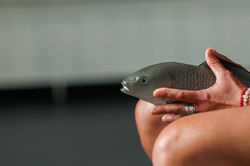
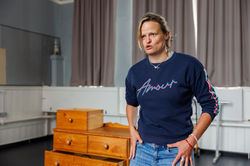
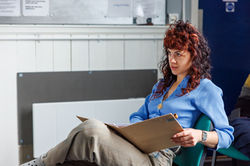
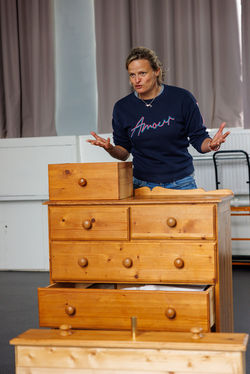
There is a light Rehearsal Room
 |  |  |
|---|---|---|
 |  |  |
 |  |  |
 |  |  |
 |  |  |
 |  |  |